Why is saying no so hard?
You agree. You smile. You move on.
And only later does it hit you:
"I didn’t actually want to do that." Or worse, "I knew I didn't want to... so why did I say yes anyway?"
You replay the moment in your head.
You feel irritated.
Then guilty for feeling irritated.
And somehow, you make it your fault.
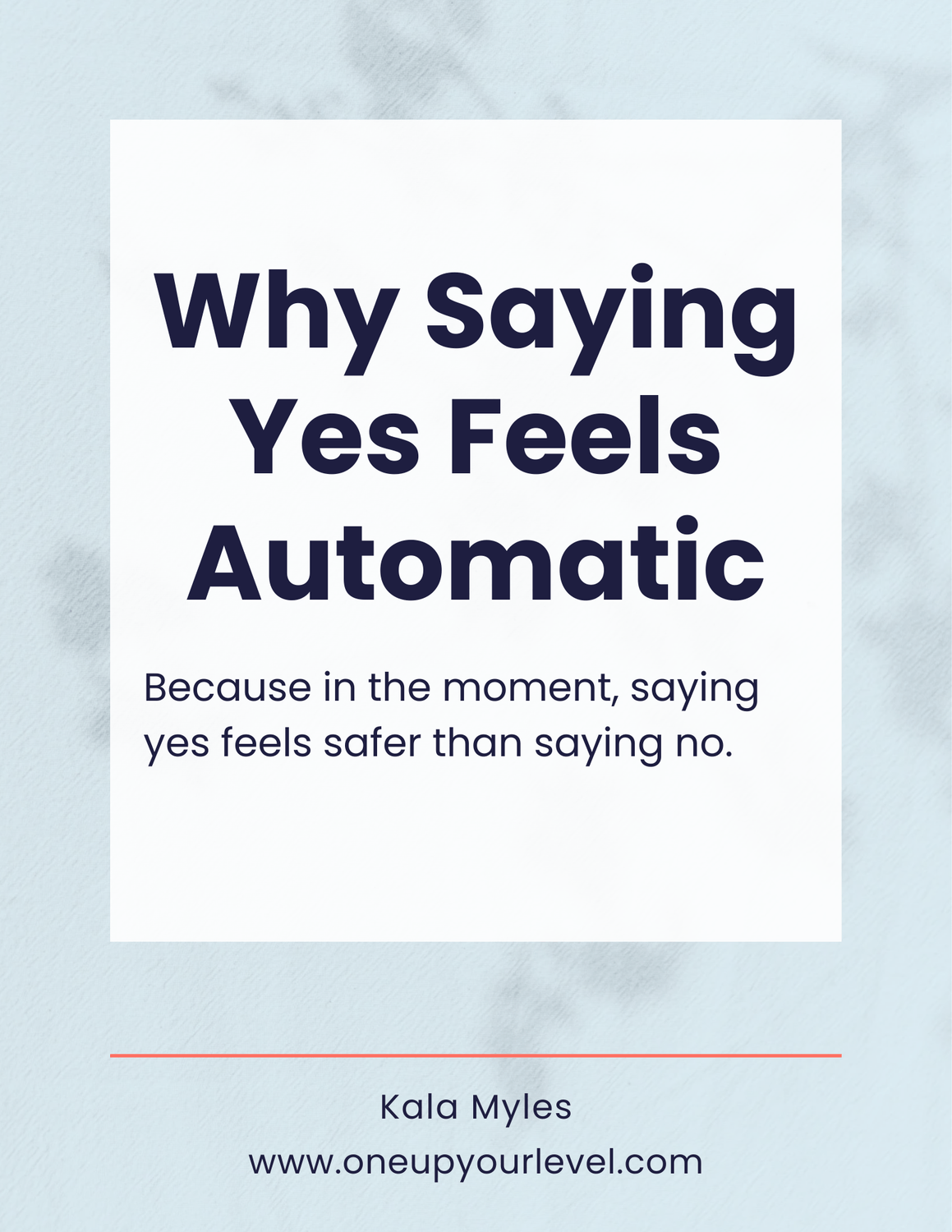
Get the explanation for why saying yes feels automatic, even when you don’t want to.

"I go along with things I don’t want, then sit with the resentment later and still somehow make it my fault."
This doesn’t look dramatic.
It looks like:
Going along with plans you didn’t choose.
Saying “it’s fine” when it isn't.
Offering to help before you've even checked in with yourself.
Agreeing in the moment and resenting it afterward.
For you, the yes doesn't feel intentional.
It just happens.
Even when you understand the pattern... it still happens.
This isn't a confidence issue.
It isn't about being "too nice."
And it isn't a willpower problem.
For many women, yes became automatic in specific moments:
Laughing off a comment that stung because correcting it felt risky.
Letting someone else decide because pushing back felt heavier than going along.
Saying "sure" to something expensive, inconvenient, or exhausting just to avoid tension.
In the moment, yes creates relief.
The room stays calm.
Nothing escalates.
But later?
You carry it.
And over time, that reflex doesn't just create resentment.
It creates distance — from yourself.
And the longer that distance grows, the harder it becomes to remember what you actually want in your life.
The quiet cost.
You start defaulting to yes before deciding.
You second-guess your own preferences.
You feel responsible for reactions that were never yours to manage.
And slowly, something more subtle happens:
You stop trusting yourself in real time.
Not because you’re indecisive.
But because you’ve been conditioned to prioritize others' comfort over your own.
And when that happens, every decision starts to feel heavier than it should.
Here's what's actually happening.
This isn't about trying harder.
It’s about understanding what happens in the split second before you answer.
Why guilt shows up before you’ve even decided if you did anything wrong.
Why knowing better hasn’t stopped the reflex.
And what has to shift before saying no feels safe instead of risky.
If you’ve ever thought, “Why does this keep happening even when I know what I want?”
You’re not broken.
You adapted.
And when that finally makes sense, the pattern stops feeling like a personal failure.
We respect your privacy and do not sell your information.

Hi, I'm Kala Myles.
I’m the founder of One Up Your Level and I help women understand why saying yes feels automatic — even when they don’t want to.
For years, I couldn’t figure out why I agreed to things I didn’t mean.
I wasn’t confused about what I wanted.
I just couldn’t access it at the moment.
I would say yes.
Feel relief.
Then later, feel resentment.
Then guilt for feeling resentful.
On the outside, everything looked fine.
Underneath, something else was happening.
My body had learned that keeping things calm kept me connected and that pushing back felt risky.
Once I understood that, everything changed.
This work isn’t about forcing yourself to be more assertive.
It’s about understanding the reflex first — so you can stop blaming yourself for something that once made sense.
Don't Miss Out: Subscribe Now!
We HATE spam. Your email address is 100% secure